
Cognitive Science& Ethics of AI
Mechanism-first AI ethics and cognitive science consultancy with the same analytical emphasis as our published course, Philosophy and Ethics of AI: what an AI system actually is, how ethical theory yields defensible verdicts, when to deploy, limit or refuse, and when trusting an AI's output is rational.

System Ontology: Model, Mechanism & Institution
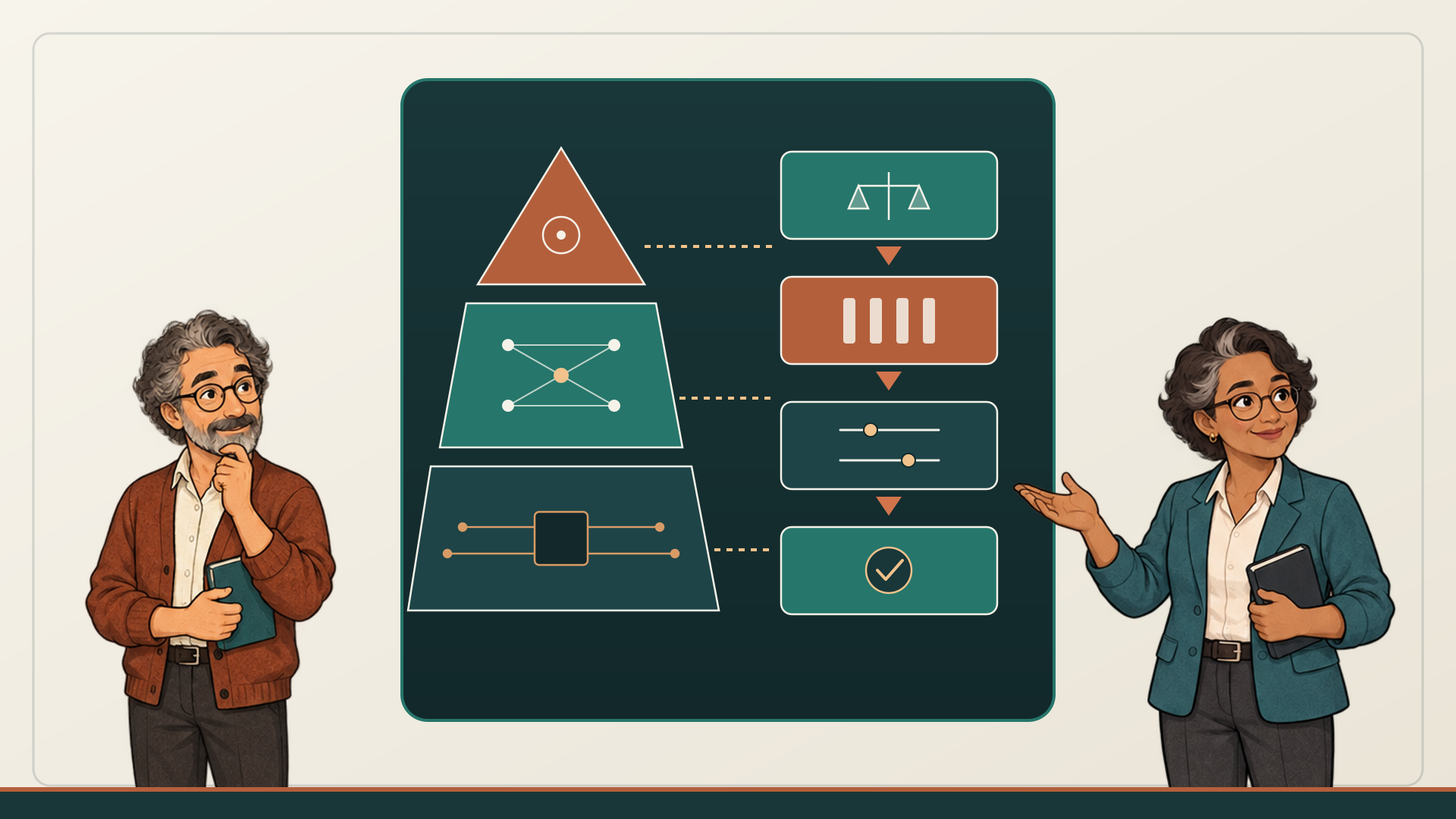
Calling a deployed AI system 'the algorithm' obscures the very facts moral reasoning depends on. We decompose your system across its physical, mechanistic and functional levels alongside the human institution surrounding it.
We test capability claims against multiple realisability, simulation versus emulation, mechanistic interpretability evidence, partial realisation, alien mechanisms and physical-world control boundaries.
From Normative Theory to Defensible Verdicts
High-level ethics checklists fail the moment principles collide in production. We separate normative criteria of rightness from practical decision procedures, applying specification and constrained balancing to mid-level principles.
We diagnose where principlism collapses—specifically the proxy problem, label drift and ungrounded convergence when a machine executes the decision procedure.

Deploy, Limit or Refuse Governance Assessments
There is no standing obligation to deploy an AI system simply because it scores well on averages. We evaluate real deployments—including algorithmic management and automated triage—across transparency, contestability, dignity, voice and outcome quality.
Every review delivers a reasoned deploy, limit or refuse verdict with explicit refusal thresholds, remediation conditions and responsibility-gap allocations.
Mind Attribution, Rational Reliance & Epistemic Safety
Users do not encounter AI outputs in a vacuum—they attribute folk minds along dimensions of agency and experience, treating fluent outputs as instruments or testimony when they are emulated cognition.
We audit human–AI workflows for Gettier-structured failure modes, calibration breakdown, repetition-driven illusions of consensus, novice–expert gaps and epistemic asymmetry.
Ethics built on mechanism, not slogans
Ethics without an adequate account of what AI systems are is built on sand. Misdescribe a system and an organisation either restricts it for the wrong reasons or fails to guard against real cognitive, epistemic and institutional harms.
Our consultancy brings the exact five-part analytical framework of Arcanamatic Learning's published course, Philosophy and Ethics of AI, directly into enterprise product, governance, legal and policy decisions—covering ontology and levels of abstraction, machine cognition and multiple realisability, specification and constrained balancing, deploy/limit/refuse verdicts, and rational reliance. Organisations can pair any audit with cohort seats in the course for internal teams.
[ Mechanism Before Verdict ]
Cognitive science & AI ethics engagements
Fixed-price assessments, audits and governance programmes for enterprise product, legal, policy, media and executive leadership teams.
Diagnostics & Deployment Verdicts
AI System & Epistemic Risk Briefing
Executive, governance, legal, policy and product leadership
A half-day working session mapping your deployed or proposed AI system across its physical, mechanistic, functional and institutional levels—identifying ethical and cognitive blind spots early.
- Model, mechanism and institution analysis (no vague 'algorithm' framing)
- Distinction between performance benchmarks, competence, simulation and emulation
- Initial scan for proxy failures, responsibility gaps and reliance traps
- Written risk briefing memo delivered in 10 working days
Deploy, Limit or Refuse Assessment
Organisations evaluating high-stakes AI or algorithmic management systems
A rigorous applied-ethics and cognitive-science audit that evaluates your deployment across specification, constrained balancing, refusal thresholds and outcome quality to produce a board-defensible verdict.
- Normative criteria vs practical decision-procedure analysis
- Proxy-measure and mid-level principle stress test
- Algorithmic management audit: transparency, contestability, dignity, voice and outcome quality
- Written deploy, limit or refuse verdict with concrete remediation conditions
- Executive and legal/policy review session
Human-AI Epistemic & Cognitive Safety Audit
Product, clinical, enterprise and high-reliability teams putting AI in front of humans
An empirical and philosophical audit of how staff or end-users form beliefs from your AI system—mitigating misplaced trust, cognitive offloading harms and epistemic opacity.
- Folk mind-attribution (agency vs experience) reliance assessment
- Gettier-structure, calibration and illusion-of-consensus diagnosis
- Novice–expert asymmetry and contestability workflow review
- Concrete interface, verification and human-oversight specifications
- Delivered in 3 to 4 weeks with leadership presentation
Governance Architecture & Standing Advisory
AI Governance Architecture & Organisational Literacy
Enterprises establishing durable internal AI review boards and decision standards
Value-sensitive governance architecture grounded in formal applied ethics and cognitive science, paired with organisational cohort licences to Arcanamatic Learning's Philosophy and Ethics of AI course.
- End-to-end internal review framework (specification, balancing and refusal thresholds)
- Procurement and deployment board decision templates
- Responsibility-gap accountability matrix across engineering, legal and operations
- Includes organisational seats in Philosophy and Ethics of AI (workbooks & slide decks)
- Executive rollout workshop
Advisory Retainer — Cognitive Science & AI Ethics
Boards, product leadership and AI governance committees
Standing cognitive-science and applied-ethics advisor reviewing new releases, vendor models, interface changes and incident escalations before they become reputational or human harms.
- Monthly review of new AI capabilities, model updates and deployments
- Pre-launch epistemic safety and proxy-failure reviews
- Board and governance-committee participation
- Priority response on emerging AI risk questions
All prices in US dollars, excluding taxes. Programme ranges depend on scope; every engagement is quoted in writing after the briefing call. No hourly billing. Confidential work under NDA as standard.
How it works
Brief us
Outline your production, script, or AI deployment through the confidential form below: where the work stands and what decision needs to be made.
A briefing call
We reply personally, usually within two working days, to schedule a 30-minute briefing call with your leadership or production team.
Fixed price, fixed date
A written proposal stating the fixed price, scope, deliverables and timetable before any work begins. Confidential work under NDA as standard.
Delivery and review
Written reports, architectural blueprints, scripts or governance verdicts, followed by a working review session with your team.