Philosophy and Ethics of AI
Philosophy of AI and AI ethics: what AI is, how to reason about it morally, when to deploy it, and why we trust it
Five video lectures, 3 h 29 min in total. English captions. Each lecture has checkpoints with worked answers, an assessment task with a worked answer, a learner workbook (PDF) and slides (PowerPoint). Intermediate level. No programming needed.
- Say exactly what an AI system is, and why calling it 'the algorithm' misleads
- Take a real kind of deployment, decide whether to deploy, limit or refuse it, and defend the verdict
- Tell when trusting an AI's answer is rational, and when it only feels that way
- Five video lectures (3 h 29 min total) with English captions, checkpoints with worked answers, assessment tasks with worked answers, learner workbooks (PDF) and slides (PowerPoint)
One-time purchase · Immediate access to all 5 lectures, PDF workbooks and slide decks
Free Preview · Lecture 1 (Chapters 1–4)
Watch the opening 8 minutes 45 seconds of Lecture 1 free before purchasing.
Preview Chapters (0:00 – 8:44)
Course Curriculum
Key Learning Outcomes
- Say what an AI system is across its model, mechanism and surrounding institution
- Distinguish physical, mechanistic and functional levels using the chef and the recipe
- Evaluate three deployment options in a worked case for a fictional housing repair service
Indexed Chapters (21)


Dr Edwin Russell
Dr Edwin Russell is a philosopher who writes about artificial intelligence: what AI systems are, how far they realise human cognition, and how ethical theory should guide decisions about using them. His starting point is that ethics without an adequate account of what these systems are is built on sand. If we misdescribe them, we may restrict them, or deny them moral consideration, without justification; or we may fail to guard against real dangers. So his work begins with the mechanism and moves from there to the moral question. His course, Philosophy and Ethics of AI, sets out his own arguments alongside current research in philosophy, cognitive science and AI interpretability. It covers machine cognition and multiple realisability, how ethical theories and principles become verdicts, when a system should be deployed, limited or refused, and when trusting an AI's answer is rational. Each lecture sets out the objections to his positions, and learners are invited to disagree with him, provided they can say why. The lectures are presented by Alex, a virtual presenter, and two animated teaching guides with synthetic voices. The arguments are his own. He writes for Arcanamatic Learning.
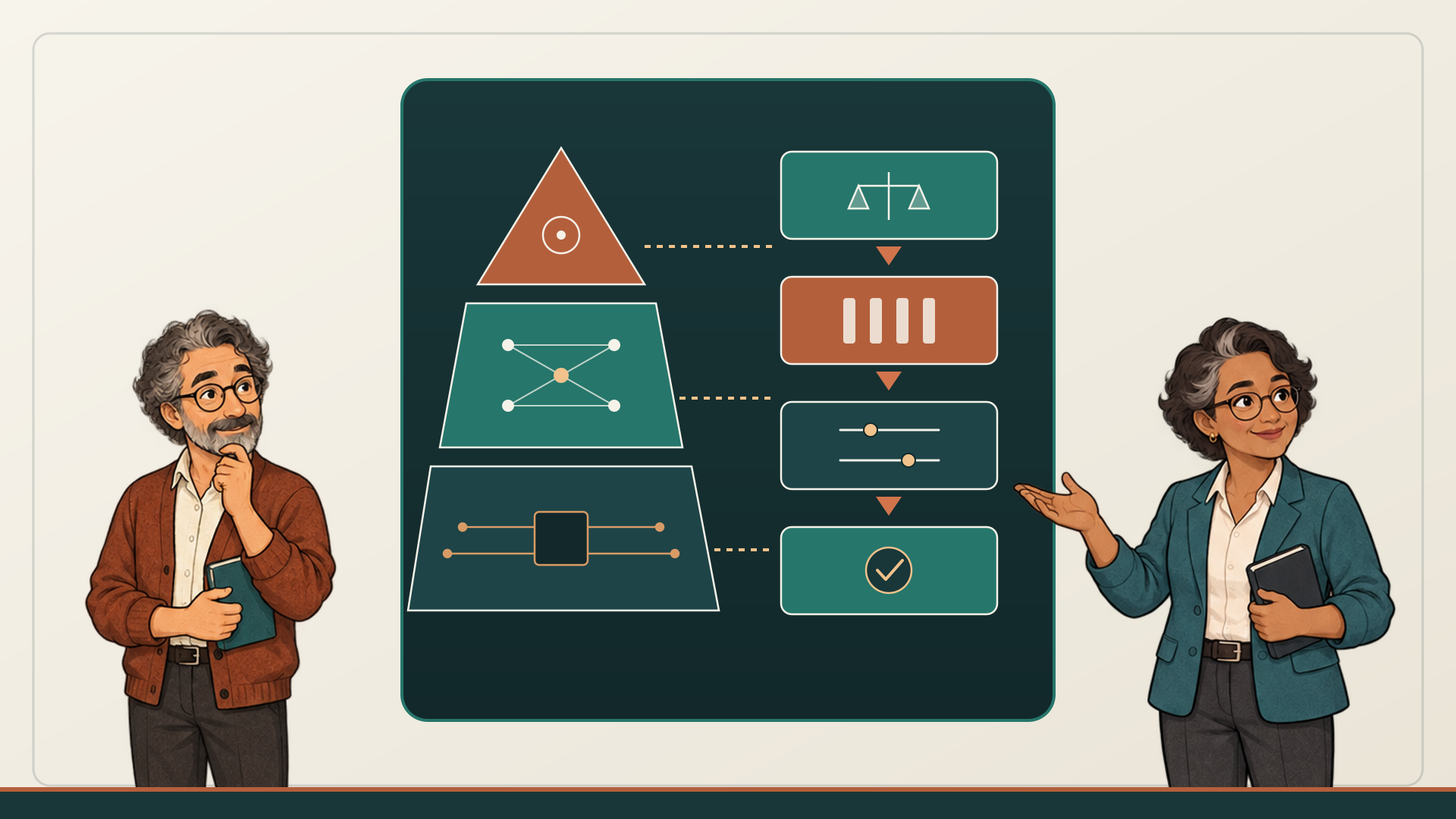
Alex is a virtual presenter, the narration and guides' voices are synthetic, and the philosopher–ethicist and neuropsychologist are animated teaching guides. The organisations in the case studies are fictional.
Organisation & Team Licensing
For governance, legal, policy and product teams. Fulfilled by direct seat activation with individual learner logins, companion PDF workbooks and PowerPoint slide decks.
Frequently Asked Questions
How long do I have access to the course?
Access is lifetime for a single one-time payment of US$149 (or A$229 in Australian dollars). There is no recurring subscription.
Are English captions and written materials included?
Yes. Every lecture includes full English captions, checkpoints with worked answers, an assessment task with a worked answer, a downloadable PDF learner workbook and the complete PowerPoint (PPTX) slide deck.
Does the player work on phones and tablets as well as desktop?
Yes. The HTML5 course player works on phones, tablets and desktop browsers, and saves your resume position per lecture.
What is the refund policy?
Refunds are available as required under the Australian Consumer Law.
Who presents the lectures?
Alex is a virtual presenter, the narration and guides' voices are synthetic, and the philosopher–ethicist and neuropsychologist are animated teaching guides. The organisations in the case studies are fictional. All arguments, scripts, workbooks and case studies are by Dr Edwin Russell.