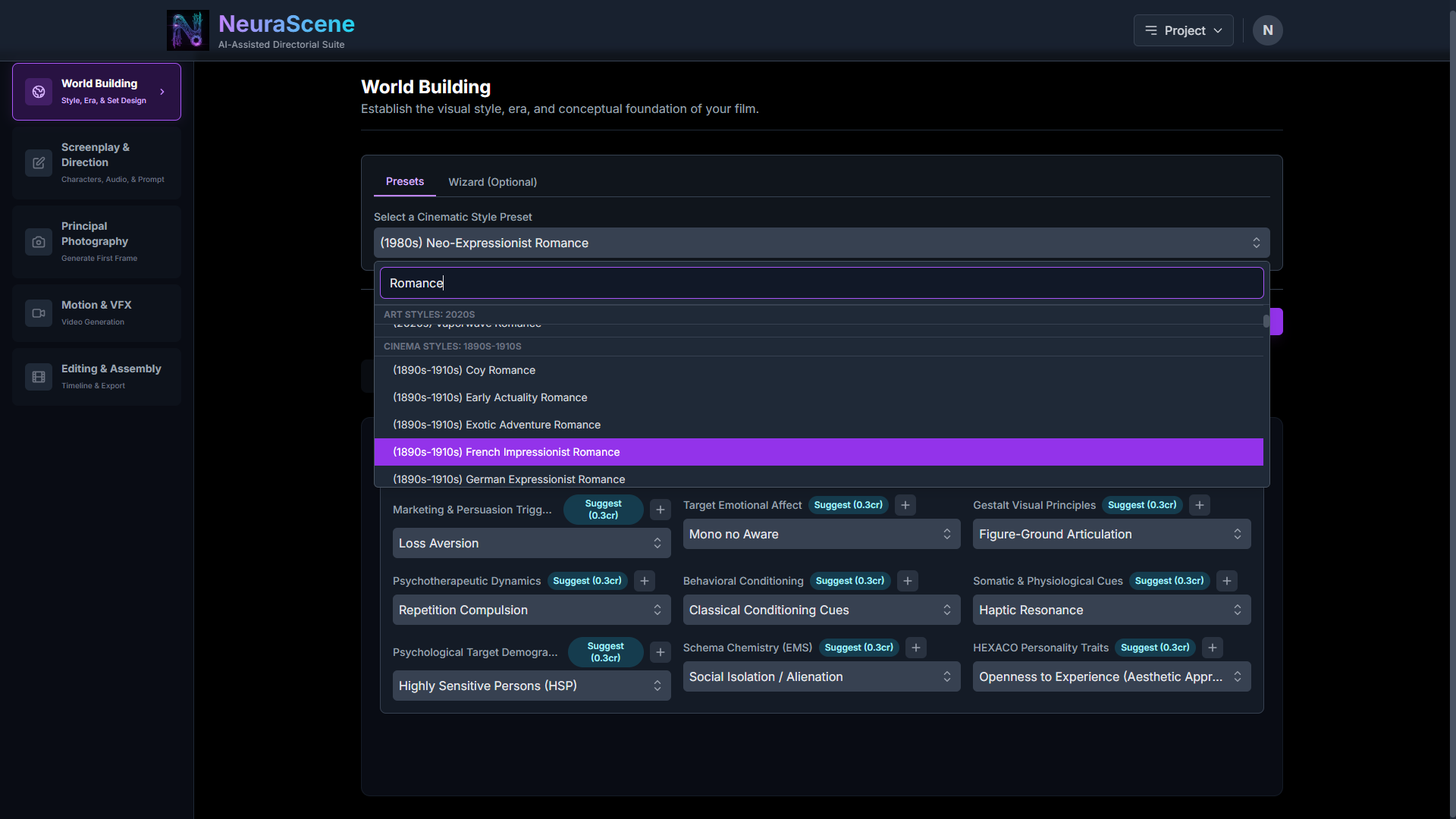
Are these options in the drop down that sound like art styles (impressionism) also cinema styles?
1950s Science fiction Art
Yes, absolutely. In the context NeuraScene—and in broader art history—most of those terms are "interdisciplinary." They began in painting or literature but were heavily adapted into Cinema Styles during the 20th century.
When NeuraScene applies these styles to video generation, it isn't just changing the "texture"; it is changing the lighting, camera movement, and emotional tone typical of those film movements.
Here is how those specific "Art Styles" translate into "Cinema Styles":
1. Impressionism (French Impressionist Cinema)
In film, this isn't just about blurry dots. It’s about subjectivity.
Visuals: Use of soft focus, lens flares, and rhythmic editing.
Goal: To convey the internal mental state of a character rather than objective reality. It looks "dreamy" and fluid.
2. Expressionism (German Expressionism)
This is one of the most iconic film styles (think Nosferatu or The Cabinet of Dr. Caligari).
Visuals: High-contrast lighting (Chiaroscuro), jagged shadows, and distorted sets.
Goal: To create a sense of dread, insanity, or intense emotion. This is the direct ancestor of Film Noir.
3. Surrealism (Surrealist Cinema)
Inspired by Salvador Dalí (who actually worked on films like Un Chien Andalou and Hitchcock's Spellbound).
Visuals: Dream logic, bizarre juxtapositions, and non-linear editing.
Goal: To tap into the subconscious. In your app, this would produce the most "absurd" and non-sensical visual transitions.
4. Realism / Neorealism
Visuals: Flat lighting, deep focus, and "unadorned" frames.
Goal: To make the scene feel like a documentary or a window into real life. It’s the "anti-style" style.
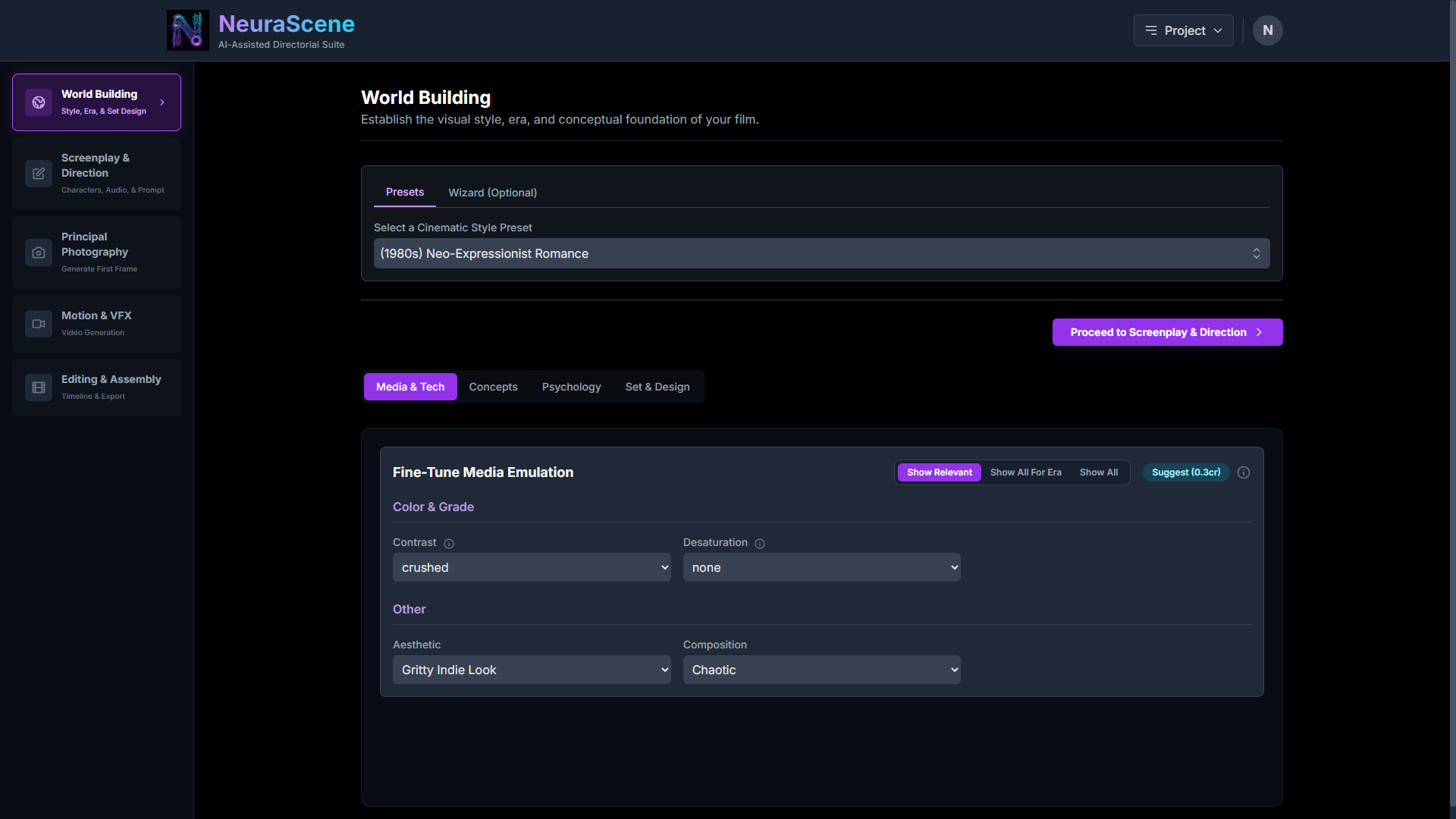
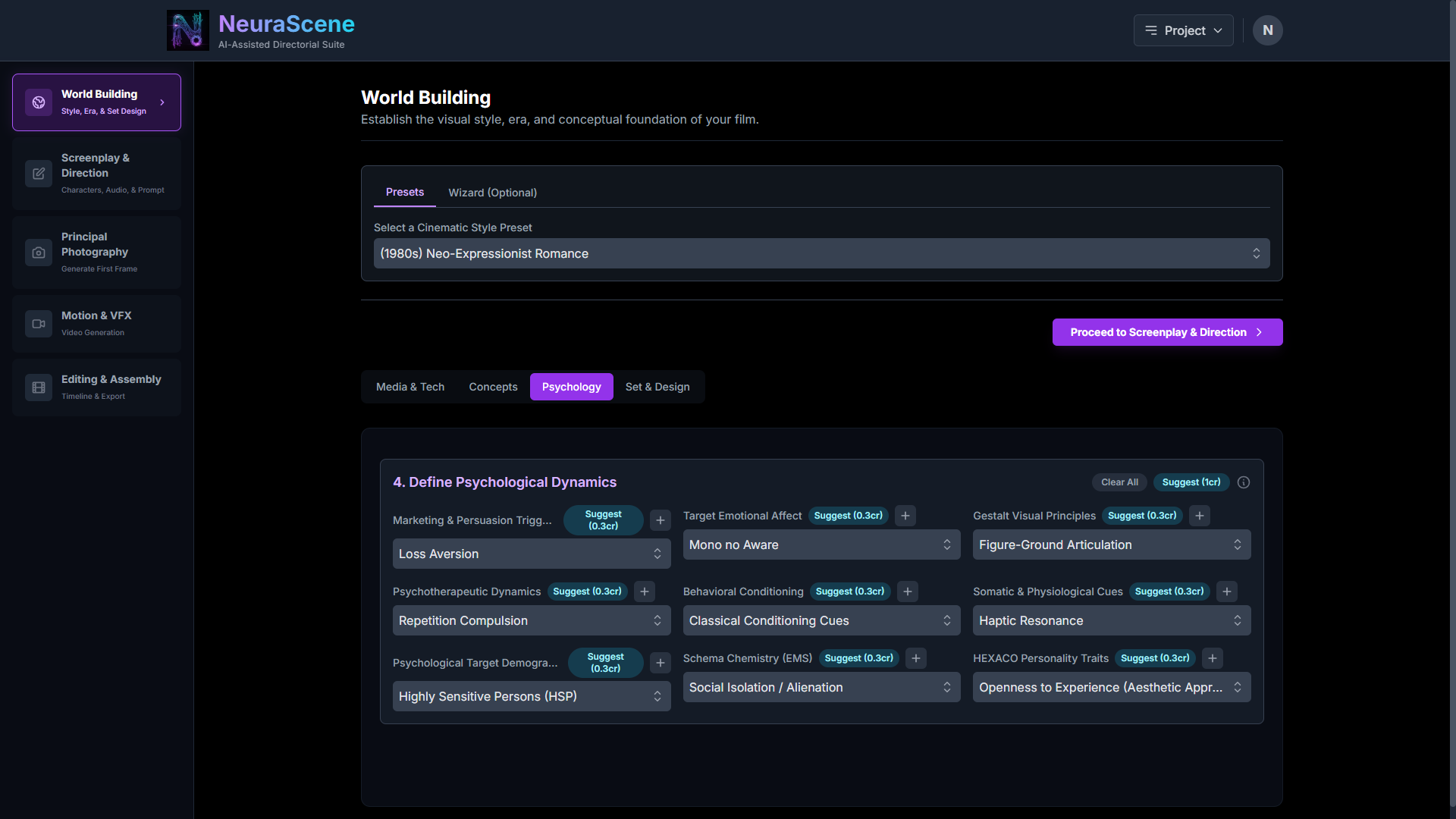
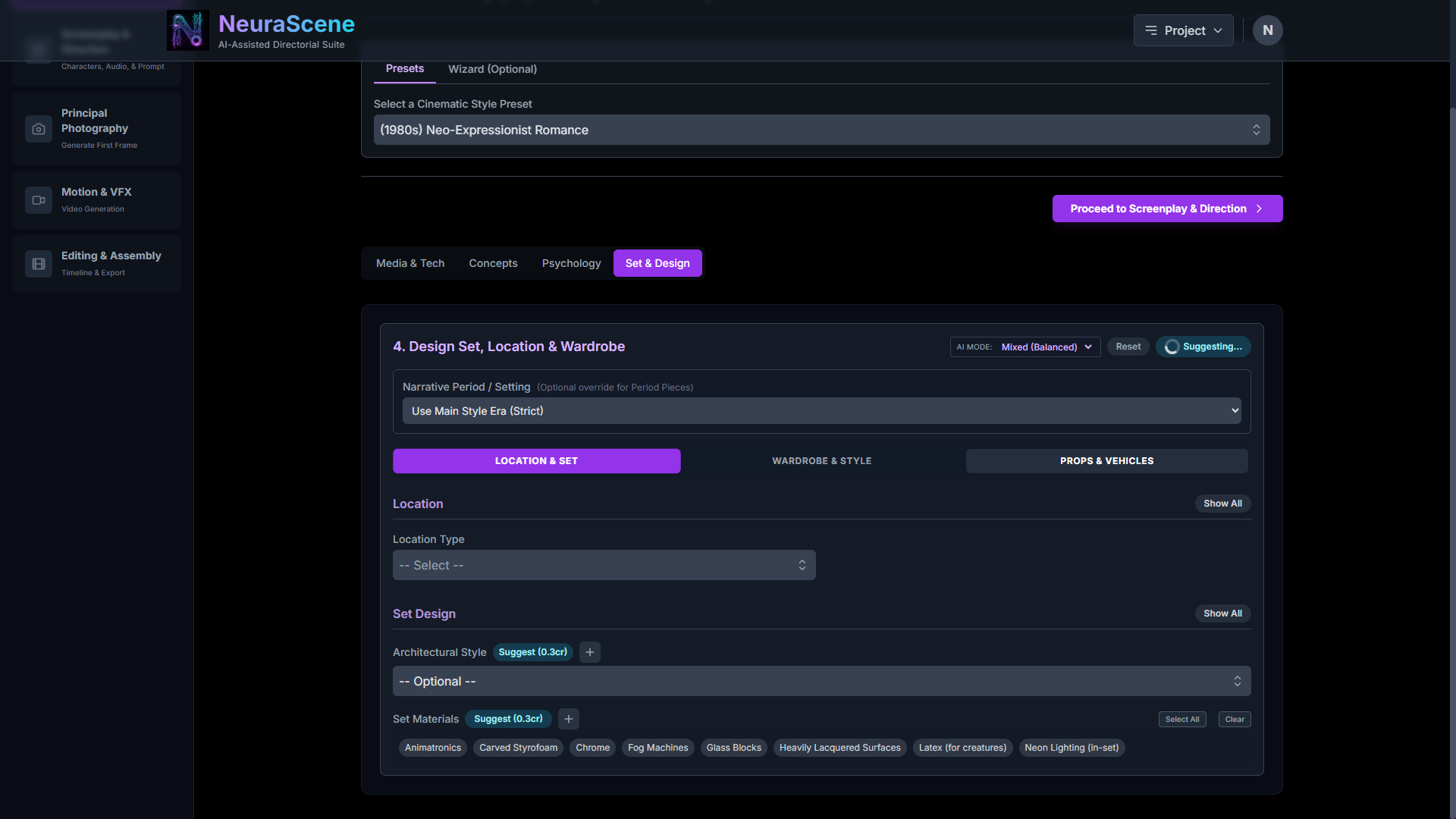
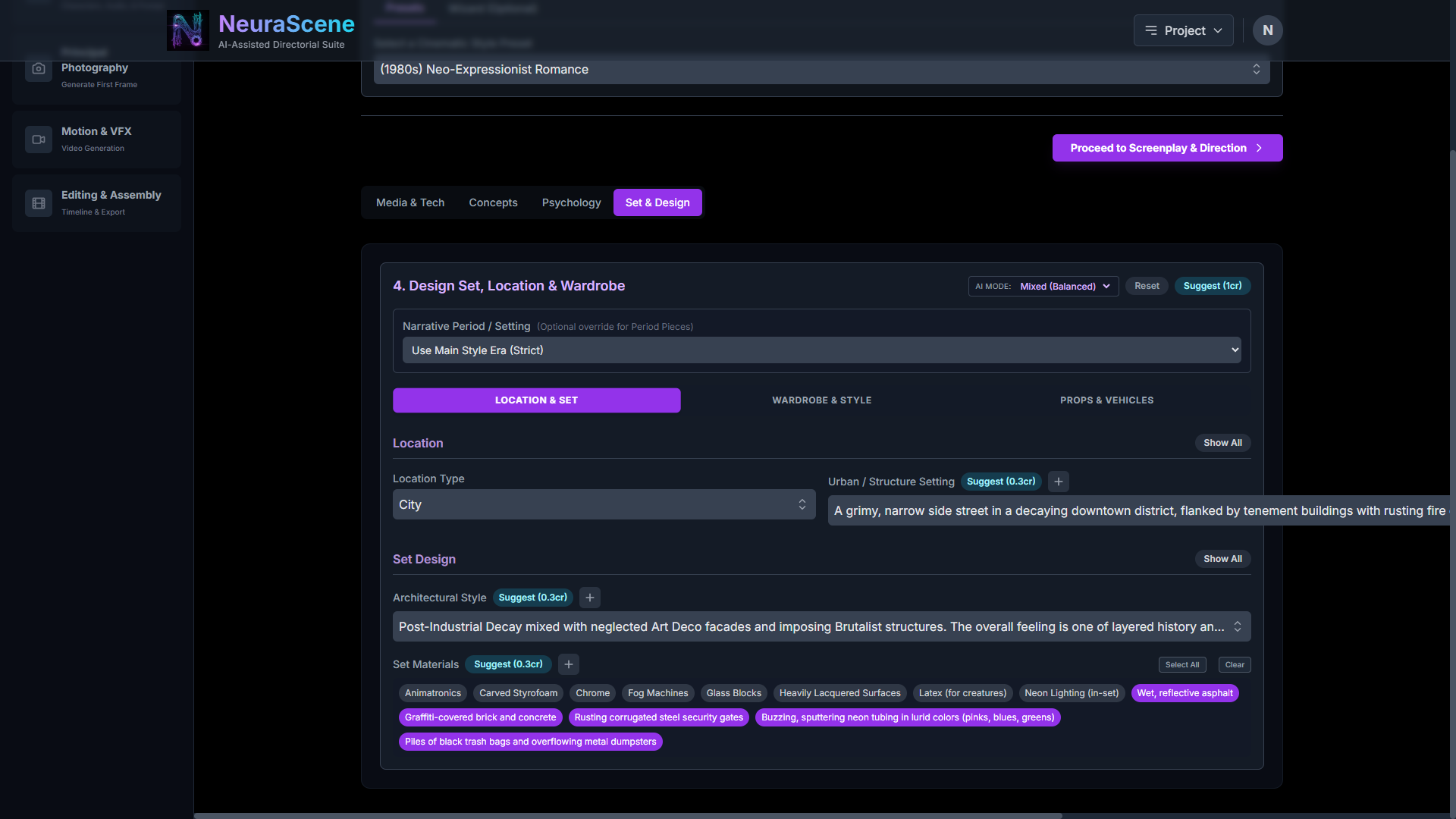
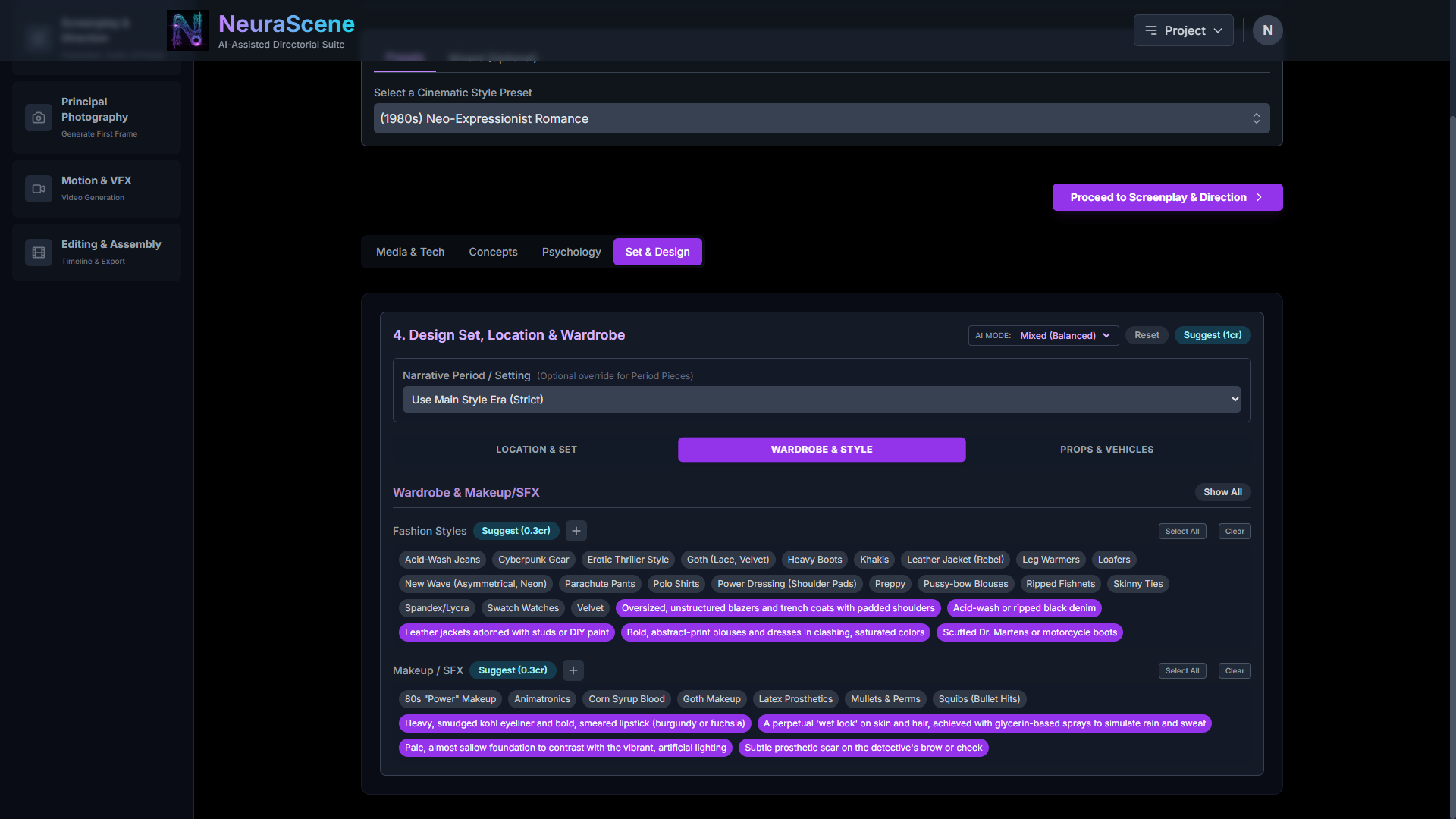
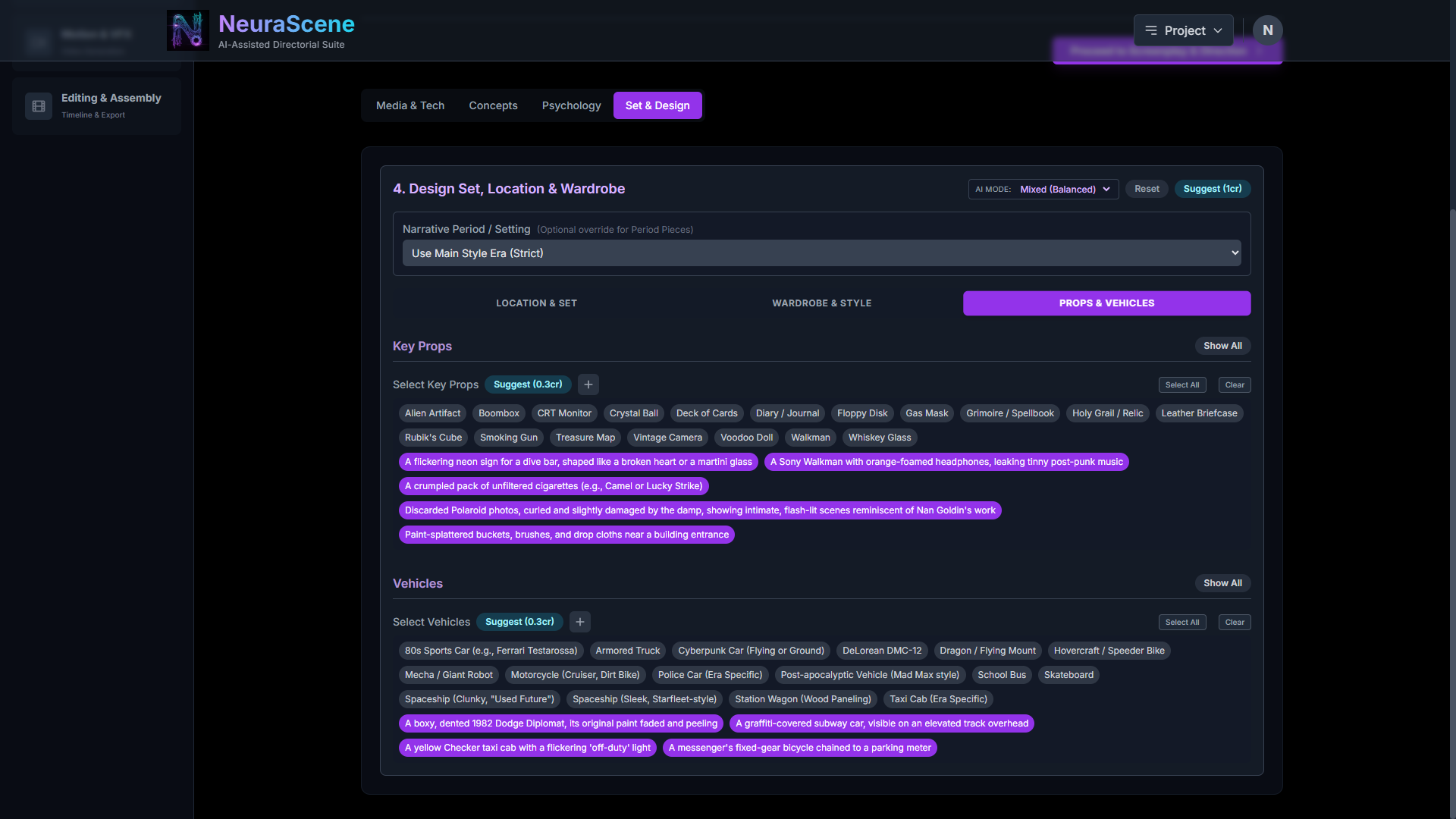
This modular prompt engineering workflow is our proprietary approach. It's powerful for directors who want high impact imagination-seeding and aesthetically er-accurate creative inspiration fast. Think of it as having a team of top creatives working for you. If you don't like the idea of putting creatives out of work: don't. There are great strategies to use to include them:
1. Quadruple (at minimum) your creative output by giving your team NeuraScene.app
2. Let your team do other things they're good at while still paying them for the work NeuraScene.app now does.
3. Use NeuraScene.app to get your production business into business, and then hire human creatives and actors. New talent; old hands; thespians: Yay!
There are plenty of similar options. If the team using NeuraScene.app kicks the goals in half the time, pay them while they take time off, for example.