NeuraScene Scene Action and Dialogue Upgrade

4/28/2026
1 min read
By Bruce R. Long

🗣️ Bring Your Script to Life: The Interlaced Dialogue & Action Editor

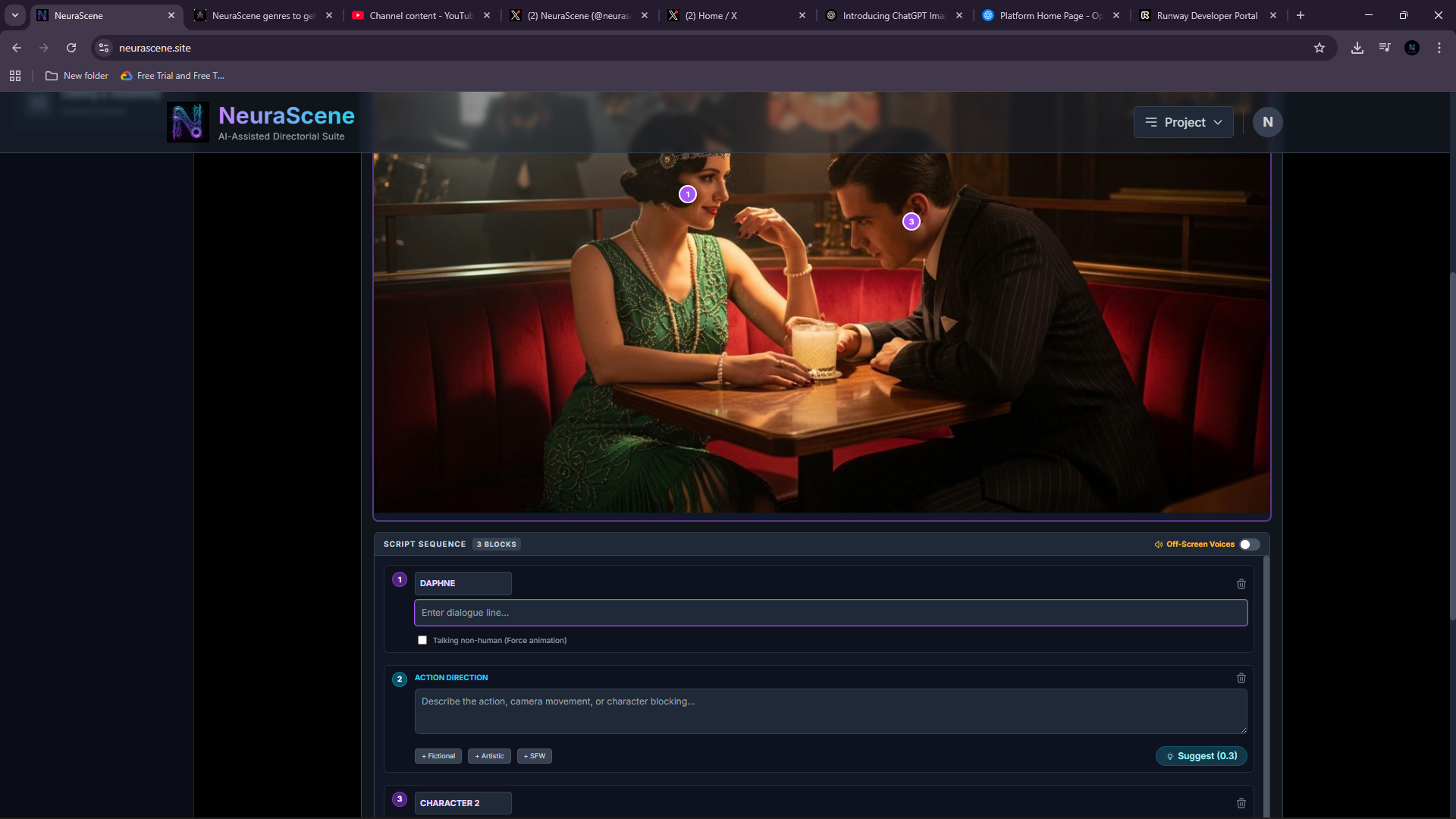
Writing a compelling scene isn't just about what characters say—it's about what they do. We've completely overhauled Step 4 of the NeuraScene workflow to bridge the gap between dialogue and cinematography.

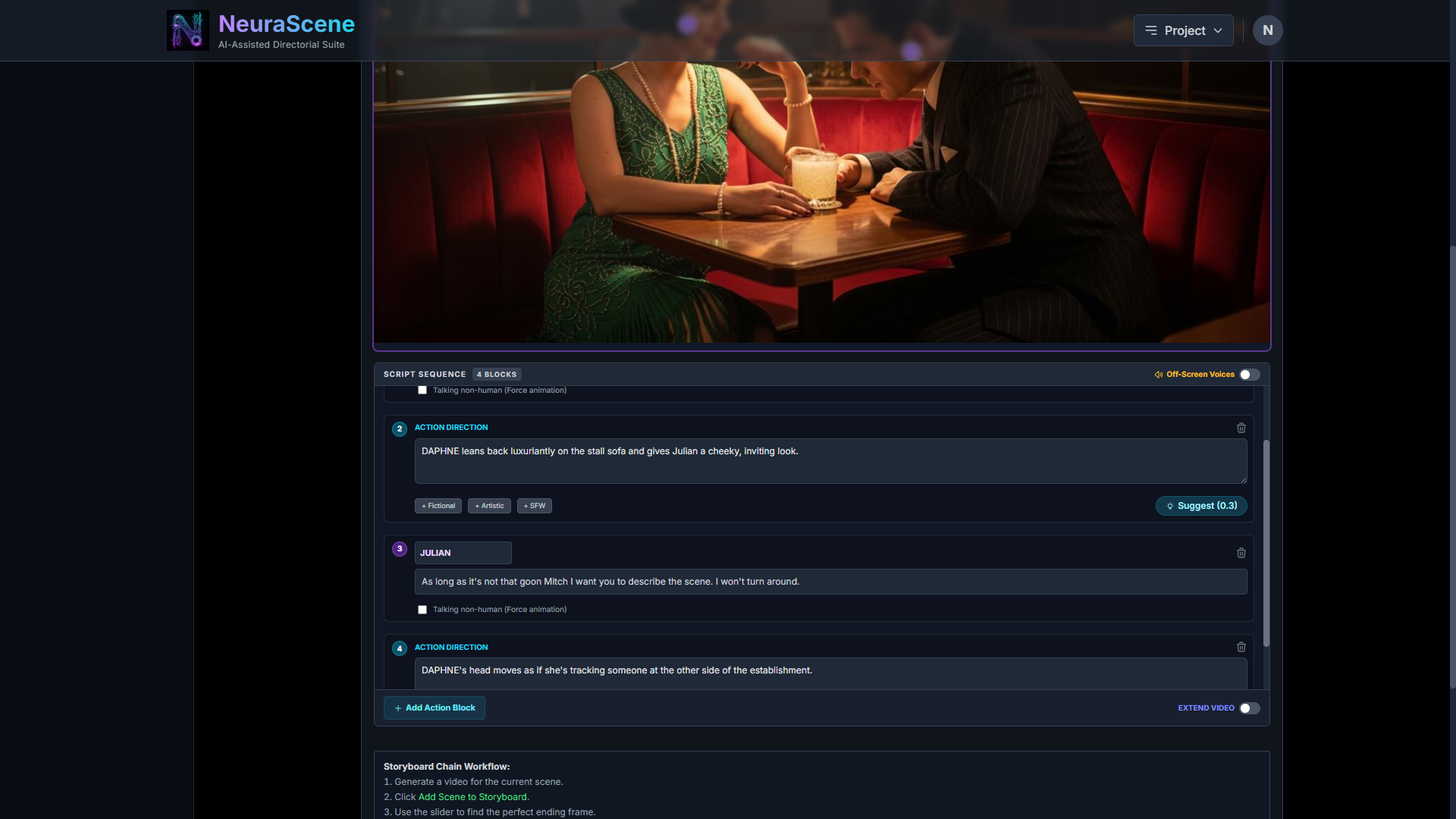
📝 Seamless Interlaced Scripting Experience true screenwriting flow. Our new Interlaced Editor allows you to fluidly alternate between vivid scene actions and character dialogue lines within the exact same view. No more jumping between tabs or breaking your creative rhythm.

🎭 Context-Aware AI Generation By interleaving action blocks directly with character dialogue, our AI engine now has unprecedented semantic context. It understands exactly when a character smirks, steps out of the shadows, or draws a weapon during their speech—ensuring the resulting generated video perfectly matches the physical pacing of the conversation.

⏱️ Chronological Flow Control Build your scenes chronologically, exactly as they will unfold on screen. The interlaced design guarantees that every dramatic pause, subtle movement, and spoken word is rigidly anchored in the timeline of your storyboard, giving your final movie an incredibly natural, human cadence.
Continue Reading

Studio News
The Bridge Shot: Blocking Extended Contact

The Bridge Shot: Blocking Extended Contact

Why forcing hostile factions into the same frame fails—and how a third-party ingroup proxy disarms audience and character suspicion first. When a script requires two deeply entrenched enemies to form an alliance, the…

The Rank-Order Arc: Blocking the Time-Jump

The Rank-Order Arc: Blocking the Time-Jump

Why multi-decade screenplays fail when characters keep the same habits, and how personality coherence fixes the cut. The multi-decade time-jump is one of the most reliable failure points in screenwriting and previs. A…

The Evaluative Blindspot: Hiding Character Shifts in Plain Sight

The Evaluative Blindspot: Hiding Character Shifts in Plain Sight

Why forcing an audience to judge a character early makes them perceptually slower to notice when that character changes. Every thriller and gothic drama faces the same staging problem: how do you transform a character…

Entitativity: Blocking the Faction, Not the Crowd

Entitativity: Blocking the Faction, Not the Crowd

Why extras read as wallpaper unless the frame encodes shared fate and rigid boundaries. Watch a weak historical epic or a rushed sci-fi pilot, and you will see fifty background performers in matching uniforms who…

The Judgement Baseline: Engineering for the Need to Evaluate

The Judgement Baseline: Engineering for the Need to Evaluate

Why some audiences require deliberate cinematic friction, and how to measure their compulsion to judge. The Compulsion to Judge In commercial cinematography, we often treat the audience as a neutral receptor—a blank…

The Locked Cut

The Locked Cut

Generative video is useless for storytelling until it can guarantee a clean cut. Here’s how NeuraScene enforces shot-to-shot continuity. The Last Frame Problem Most generative video platforms produce beautiful,…


Discussion

(0)

Join the discussion

Sign in to comment