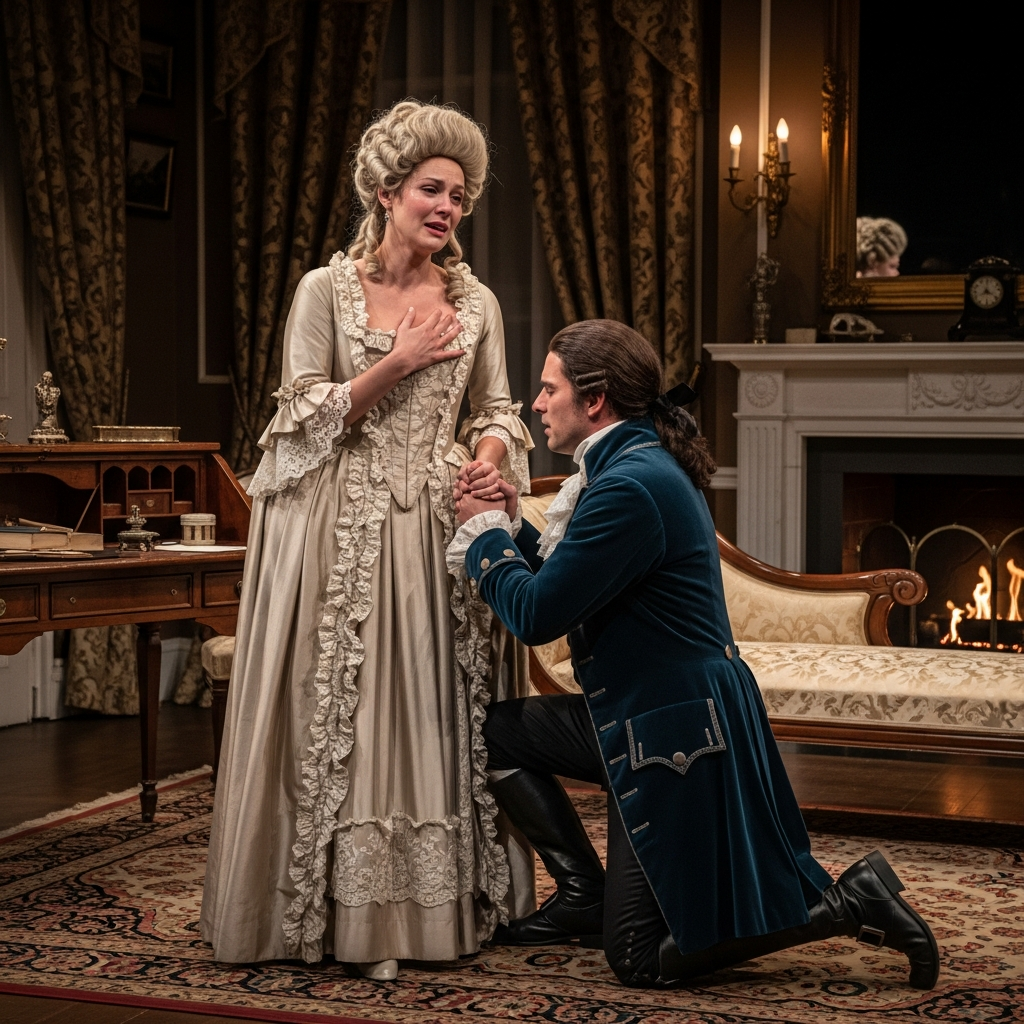
When an actor is relaxed, knows their lines, and is looking at their scene partner, but the performance still feels grating or "off," acting theory usually points to a few specific, interconnected failures. In formal training—drawing from practitioners like Constantin Stanislavski, Sanford Meisner, and Uta Hagen—this elusive gap is broken down into a few precise mechanical and psychological errors.
Here is exactly what those B-movie actors are doing wrong, according to acting theory.
1. They are "Indicating" (Showing, Not Doing)
In acting theory, indicating is the cardinal sin. It happens when an actor tries to show the audience (and the camera) what they are feeling, rather than simply pursuing a goal and letting the emotion happen as a byproduct.
A B-movie actor plays the "state" of being angry, sad, or relaxed. They layer on generic facial cues (furrowed brows, sighs, rigid posture) to telegraph to the audience, "I am angry now." An A-list actor doesn't try to look angry; they try to win the argument, intimidate their opponent, or suppress their rage so they don't lose their job. They are playing an action (a verb), not a state of being (an adjective). When actors indicate, the body language feels unnatural because human beings in real life rarely try to show their emotions—we actually spend most of our energy trying to hide them.
2. They Aren't Actually Listening (The Meisner Trap)
Sanford Meisner famously defined acting as "behaving truthfully under imaginary circumstances." The most common reason a B-movie dialogue scene falls flat is that the actors are not actively listening to each other.
Instead of listening, they are waiting for their cue to speak. Because they are fluent with their lines (your point #2), they know exactly what they are going to say next. This creates a rhythmic tennis match: Actor A speaks -> Actor B waits, hears their cue word, then speaks -> Actor A waits...
In reality, listening is an active, physiological process. When someone speaks to us, their words physically affect us ("the pinch"), and our response is generated in real-time ("the ouch"). B-movie actors fail to let the other actor's words "land." They are in a relaxed bubble of their own performance, unaffected by their scene partner.
3. The Illusion of the First Time (Addressing Your Pacing Observation)
Your frustration with pacing (point #5) is incredibly accurate. The artificial, overly enunciated pacing of B-movies happens because the actors fail to create the Illusion of the First Time.
In real life, people speak quickly because thought moves at lightning speed. However, real speech is also messy. We overlap, we trail off, we realize what we are going to say while we are saying it, and we hesitate when searching for a specific word. B-movie actors pace themselves evenly because they have predetermined the exact inflection and rhythm of the entire sentence in rehearsals. The performance feels grating because the subconscious mind of the viewer recognizes that the actor already knows the end of their own sentence before they've started speaking it.
4. Misunderstanding Subtext
In a bad movie, actors play the text. In a great movie, actors play the subtext—the unspoken thoughts, desires, and contradictions beneath the words.
If the script says, "I'm fine," a B-actor says it pleasantly, indicating that they are fine. A great actor might say "I'm fine" while subtly conveying, "If you ask me that one more time, I will scream." When an actor lacks subtext, they look physically empty, even if they are perfectly relaxed. The camera is ruthless; it picks up on the fact that there is no internal monologue happening behind the eyes.
5. The Absence of Inner Monologue
Humans generally speak quite quickly. We do this because our mouths are trying to keep up with our brains.
Great actors have a continuous inner monologue running beneath their lines. The text they speak is just the tip of the iceberg; the subtext (what they are thinking but not saying) provides the weight. In B-movies, actors often only think about the words they are saying right at that moment. Their eyes look dead because there is no cognitive friction—no subtext—happening behind them.
6. Anticipation (The Enemy of Spontaneity)
B-actors often react a microsecond before the stimulus actually happens because they have read the script. They flinch just before the door slams, or they start looking sympathetic before the other actor finishes the sad story. This destroys the illusion of the "first time." The body language fails your believability test because it lacks the tiny, chaotic delays of genuine human processing.
On Human Psychology, Facial Cues, and Body Language
When directing both human and AI actors:
On Eye Contact (Point 3): It is important for actors to look at each other's faces during dialogue most of the time, but unrelenting eye contact actually looks highly unnatural and theatrical on film, and human being have deep, evolved reactions for it related to threat detection and sociopath detection. In reality, human beings constantly break eye contact when they are processing information, recalling a memory, or feeling vulnerable. We usually only lock eyes intensely during deep intimacy, severe aggression, or active persuasion. Forcing constant eye contact can make human actors stiffen up.
On Self-Monitors (Point 4): Highly self-monitoring (psychological term) humans often make worse film actors even though psychological literature suggests that they are likely to be good at it because they are practised at changing mode and performing in human interactions. Why? Film acting requires a profound lack of self-consciousness in the moment. The actor must do all their analytical preparation (the "facade" construction) before the cameras roll, but once action is called, they must surrender that control completely to be spontaneously present.