
Introduction: The Convergence of Classical Theory and Virtual Production
The art of directing performance—whether coaxing truth from a human actor on a physical stage or engineering reality through an artificial intelligence pipeline—rests on a singular, uncompromising objective: the generation of believable human behavior under imaginary circumstances. Historically, the failure to achieve this believability manifests as the "B-movie" performance. In these instances, an actor may be physically relaxed, flawlessly memorized, and visually engaged with their scene partner, yet the performance remains grating, artificial, or fundamentally unconvincing. This failure is rarely one of conscious effort or malicious intent; rather, it is a failure of mechanical execution and psychological depth. In the pedagogical frameworks forged by foundational practitioners such as Constantin Stanislavski, Sanford Meisner, and Uta Hagen, these elusive gaps in authenticity are deconstructed into precise, interconnected errors: indicating, the absence of active listening, the loss of the illusion of the first time, and the void of subtext.
The advent of massive aesthetic ontological AI systems, such as NeuraScene, fundamentally alters the director’s technical toolkit while simultaneously reinforcing the absolute necessity of classical acting theory. NeuraScene and equivalent synthetic film production systems—powered by advanced diffusion models like Google’s Veo 3.1 and NanoBananaPro—require the director to translate ephemeral psychological subtext into highly structured data architectures. The artificial actor does not possess an ego, a repository of childhood trauma, or a physical body restricted by biological imperatives; it is, at its core, a stochastic probability engine designed to predict pixel arrangements based on textual inputs. Therefore, to prevent a synthetic actor from "indicating" or appearing lifeless, the director must meticulously prompt the exact psychological architectures, micro-behaviors, and temporal delays that great human actors generate intuitively.
This manual serves as an exhaustive theoretical and technical framework for the modern cinematic director. It dissects the mechanical failures of poor performance, outlines the psychological schemas necessary for constructing complex character subtext, and provides a rigorous technical methodology for executing these performances. This synthesis applies equally to human talent and to AI-assisted expert systems, addressing the immense architectural challenges of virtual production, the management of temporal continuity, and the inherent limitations of automated scene generation.
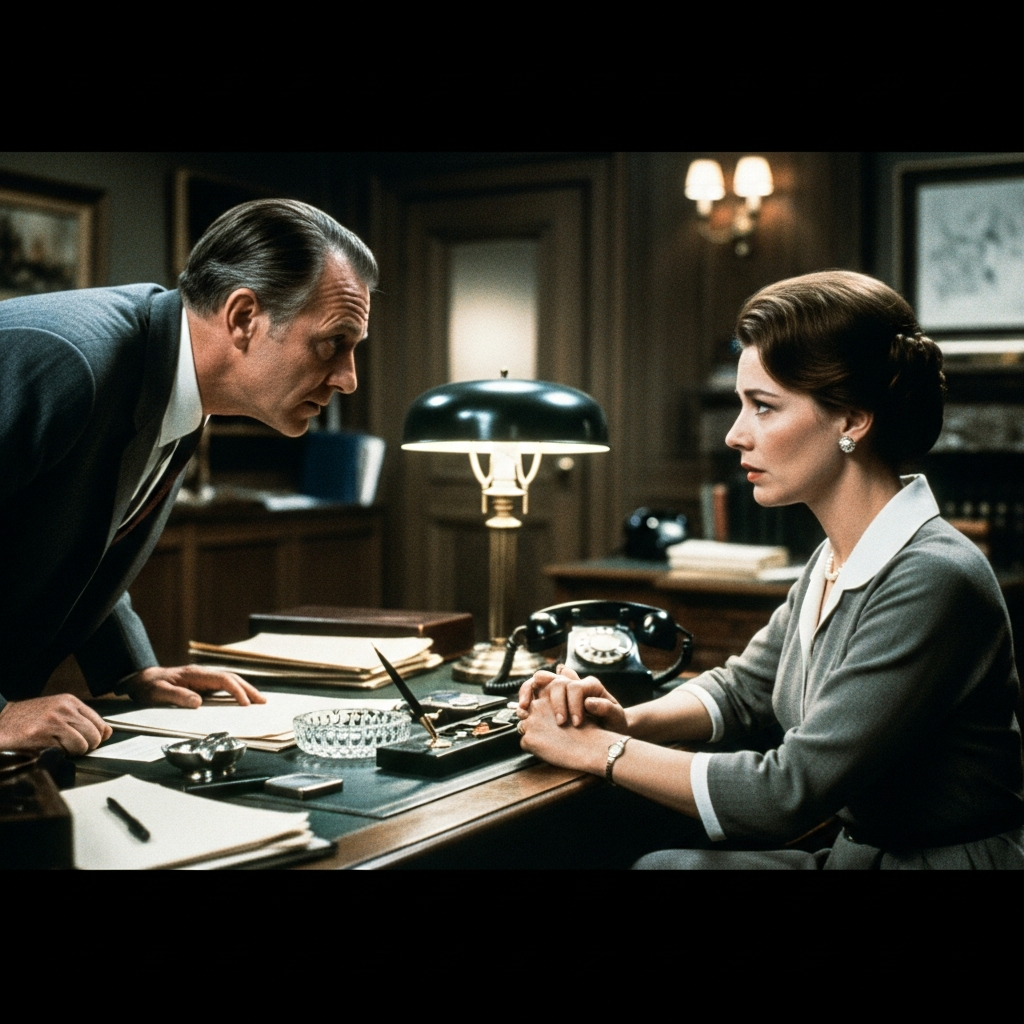
The Mechanical Failures of Performance and Their Synthetic Correlates
To direct an authentic performance, one must first identify the specific mechanics of artificiality. The subconscious mind of the viewer is an evolutionary marvel, highly attuned to detecting incongruities in human behavior, particularly regarding threat detection and social cohesion. When a performance fails the believability test, it is because the actor has violated the natural laws of human processing and reaction.
The Cardinal Sin of Indicating (Showing, Not Doing)
In the pedagogy of acting theory, indicating is defined as the cardinal sin. It occurs when an actor attempts to "show" the audience, the camera, or their scene partner what they are feeling, rather than pursuing an active objective and allowing the emotion to arise as a natural, unforced byproduct of that pursuit. A human being in reality rarely attempts to display vulnerability, anger, sadness, or fear; conversely, immense psychological and physiological energy is typically expended to conceal these vulnerable states from public observation.
A poorly directed actor plays the "state" of an emotion. They layer generic facial cues—furrowed brows, rigid posture, heavy sighs, or clenched fists—to broadcast their internal condition to the viewer. This approach fails because it reverses the natural order of human behavior. Authentic performance demands that the actor play an action (a verb) rather than a state of being (an adjective). The objective of the performer is not to "be angry," but rather to "intimidate the opponent," "win the argument," or "suppress rage to avoid professional ruin." When a performance is rooted in a verb, the body language aligns with genuine human interaction, and the emotion bleeds through the cracks of the actor's attempt to achieve their goal.
When directing a synthetic actor via generative AI platforms like Veo 3.1 or Seedance 2.5, the exact same rule applies. Prompting an AI with the directive "the character looks angry" will inevitably yield a generic, indicating output—a caricature of rage. The digital director must instead prompt the physical manifestations of suppressed action. The prompt must be engineered to describe the physiological leakage of emotion: "the character clenches their jaw while attempting to maintain a neutral expression, deliberately avoids direct eye contact, and white-knuckles the edge of the table." By instructing the generative model to render the suppression of the state rather than the state itself, the resulting output achieves a level of cinematic realism indistinguishable from elite human performance.
The Meisner Trap and the Physiology of Active Listening
Sanford Meisner famously defined the craft of acting as "behaving truthfully under imaginary circumstances." The most pervasive reason a dialogue scene falls flat—rendering it a B-movie exchange—is the absolute absence of active listening. In artificial performances, actors wait for their auditory cue to speak rather than allowing the words of their scene partner to physically and emotionally affect them. Because they are fluent in the text and have rehearsed the sequence, they anticipate the rhythm of the exchange, creating a predictable, tennis-match cadence of dialogue: Actor A speaks, Actor B waits for the cue word, Actor B speaks, Actor A waits.
In reality, listening is not a passive waiting period; it is an active, demanding physiological process. When a stimulus occurs—whether a spoken insult, a confession of love, or a sudden physical gesture—it creates an internal "pinch," which necessitates a real-time "ouch." The failure to let a scene partner's words "land" isolates the actor in a relaxed bubble of their own predetermined performance. They remain entirely unaffected by their environment.
This phenomenon is intricately tied to the biology of eye contact. While it is important for actors to look at each other during dialogue, unrelenting eye contact appears highly unnatural and theatrical on film. Human beings possess deep, evolved reactions to unbroken stares, often associating them with threat detection or sociopathic behavior. In authentic interactions, human beings constantly break eye contact when they are processing complex information, recalling a distant memory, or feeling suddenly vulnerable.
For the AI director utilizing the NeuraScene pipeline, this Meisner trap is circumvented through the system's analytical feedback loop and character marking features. The AI architecture engineers the prompt into structured data, Veo generates the scene, and the system then analyzes the visual output, suggesting the next action based explicitly on what it saw. This enforces a synthetic version of active listening, ensuring that the subsequent clip is a direct, observable reaction to the stimulus of the preceding frames. Furthermore, the director must explicitly script the breaking of eye contact within the prompt. Instructing the AI to "break eye contact, look down to the left to process the emotional weight of the statement, and then slowly return the gaze before speaking" introduces the necessary physiological processing delay that mimics the "pinch."
The Illusion of the First Time and the Subversion of Anticipation
Human thought moves at lightning speed, but human speech is inherently messy and chaotic. Real conversations are characterized by overlaps, trailing sentences, mid-thought realizations, and awkward hesitations as the brain searches the lexicon for a specific word. Poor performances feature artificially smooth, evenly enunciated pacing because the actor has predetermined the exact inflection and rhythm of the entire sentence during rehearsal. The subconscious mind of the viewer immediately rejects this delivery because it recognizes the cognitive impossibility: the actor knows the end of their own sentence before they have even begun speaking it.
This lack of spontaneity is severely exacerbated by the psychological error of anticipation. Actors who have memorized a script often react a microsecond before the stimulus actually occurs in the physical space. They flinch just before a door slams, or they begin to display a sympathetic expression before the other actor has finished articulating a sad story. This destroys the "illusion of the first time," stripping the scene of its spontaneity and rendering the body language unbelievable because it lacks the tiny, chaotic delays inherent to genuine human processing.
When prompting AI generation systems, the director must combat anticipation by explicitly coding processing delays into the timeline of the generation prompt. Utilizing NeuraScene's dialogue markers and true lip-sync capabilities allows the director to dictate not just what is said, but the exact micro-timing of the delivery. The prompt must dictate that the facial expression remains neutral or engaged in the previous thought until the exact millisecond the new stimulus is introduced, followed by a specified fractional delay before the synthetic facial muscles begin to form the reaction.
Subtext and the Void of the Inner Monologue
In poor filmmaking, actors play the text; the words they speak represent the entirety of their psychological reality. In masterful filmmaking, actors play the subtext—the unspoken desires, contradictions, fears, and hidden thoughts that flow violently beneath the surface of the dialogue. If a script dictates the line, "I'm fine," an indicating actor will deliver it pleasantly to match the literal text. A masterful actor will deliver the exact same line while subtly projecting an internal monologue that violently contradicts the words, such as, "If you ask me that one more time, I will systematically destroy your career."
Without subtext, a performer appears physically empty. The cinematic camera is a ruthless instrument; it magnifies the cognitive friction—or the total lack thereof—happening behind the performer's eyes. Humans generally speak quickly because their mouths are struggling to keep pace with a rapid, overflowing stream of internal thought. Great actors maintain a continuous, running inner monologue beneath their lines, providing the gravitational weight that makes the performance compelling. In B-movies, actors often only think about the words they are saying at that exact moment, resulting in "dead eyes."
For the virtual director, translating this inner monologue into a text-to-video prompt is the absolute crux of the craft. Diffusion models do not have an inner monologue. If they are not explicitly told to render the micro-expressions of cognitive friction, they will render a blank, default state. The prompt must describe the subtextual tension: "The character smiles warmly, but a slight tension in the lower eyelid and a rigid posture reveal an underlying current of intense paranoia."

Psychological Architectures in Character Construction
To generate authentic subtext, the director must possess a profound understanding of the psychological architecture of the character. Human behavior is not random; it is driven by deeply ingrained cognitive frameworks, early life experiences, and maladaptive coping mechanisms. Utilizing clinical psychology frameworks—such as schema therapy, personality organization, and self-monitoring theory—provides the director with a robust, scientifically grounded vocabulary for building characters and prompting hyper-realistic AI behaviors.
Schema Chemistry and Maladaptive Interpersonal Dynamics
Schema chemistry refers to the powerful, largely unconscious, and highly volatile interaction between an individual's early psychological schemas and those of a romantic or interpersonal partner. It explains why intense attraction is rarely random and is frequently driven by the activation of well-rehearsed, often negative, emotional patterns. Early maladaptive schemas are broad, pervasive themes regarding oneself and one's relationships, developed during childhood and elaborated throughout a lifetime. They are essentially self-defeating emotional and cognitive patterns that fight for survival because they feel familiar and "right," even when they cause profound psychological suffering.
For the director, schema chemistry is the ultimate engine for narrative subtext. When characters interact, they are not merely exchanging dialogue to advance a plot; they are constantly triggering each other's schemas, creating layered conflicts beneath the surface of the text.
The Abandonment Schema: A character burdened with an abandonment schema is unconsciously drawn to emotionally unavailable or already-attached partners, creating a self-validating, cyclical prophecy of isolation. When directing an actor with this character profile, the subtext of every interaction—even casual ones—is a desperate, agonizing need to secure the partner, masked by behaviors ranging from subtle clinging to preemptive, aggressive rejection.
The Defectiveness Schema: A character with a defectiveness schema feels safest and most familiar with subtly critical, overly perfectionistic, or judgmental partners because this external abuse aligns perfectly with their internal narrative of worthlessness. The actor’s inner monologue is dominated by a paralyzing fear of exposure. They cope through situational and affective avoidance, actively blocking disturbing thoughts, or entirely avoiding social situations due to an acute, excruciating sensitivity to perceived rejection.
The Emotional Deprivation and Self-Sacrifice Schemas: Characters operating under self-sacrifice schemas feel most alive and purposeful when caring for highly dependent, often toxic partners, entirely at the cost of their own emotional and physical needs. Conversely, those with emotional deprivation schemas repeatedly choose partners who are fundamentally incapable of offering emotional closeness.
The clinical signs of schema chemistry—sudden intense attraction, feelings of inexplicable familiarity, constant preoccupation and anxiety, intense emotional fluctuations, and a profound fear of leaving despite immense unhappiness—provide a structural blueprint for character arcs and scene pacing. When schema chemistry occurs on screen, what the characters interpret as a romantic "spark" or "love at first sight" is, in clinical reality, the activation of early childhood trauma. This immense cognitive dissonance between the character's conscious belief (that they are falling in love) and their subconscious reality (that they are repeating a cycle of abuse) creates the exact cognitive friction required for a compelling, award-winning performance.
Furthermore, schema theory provides a vital framework for understanding and directing high-stakes conflict, including intimate partner violence (IPV). An intimate relationship creates a context where there is an increased likelihood of early relational patterns being repeated. Faulty assumptions regarding a perpetrator's motivations—often rooted in a desperate need for power and control over their own triggered schemas—can manifest in coercive control and violence. For a director managing a dark, dramatic narrative, understanding these triggers ensures that depictions of violence are rooted in psychological reality rather than gratuitous exploitation, allowing actors to access the terrifying authenticity of these dynamics.

Cluster B Personality Dynamics
Understanding severe personality styles allows the director to orchestrate high-conflict, dramatically rich interactions without resorting to melodrama. The clinical dynamics of Histrionic and Narcissistic personality styles offer specific, highly actionable behavioral templates for performance.
Histrionic Presentation: Characters with a histrionic style present with a vague, dramatic, and highly theatrical presentation designed explicitly to elicit attention and caregiving from their environment. Behaviourally, they are seductive and capricious; intrapsychically, they are shallow and impressionistic. Clinically, they present as hedonistic, unmethodical, charming, and superficial. They possess a tendency to exaggerate wildly to gain attention, are easily captured by novel stimuli in their environment, and utilize an exaggerated expression of emotion while their speech lacks concrete detail. They view relationships as far more intimate than they are in reality. To direct this, the actor (or the AI prompt) must emphasize a relentless "social butterfly" dynamic—constant physical movement, high suggestibility, and a desperate, vibrating underlying need to remain the absolute center of attention.
Narcissistic Presentation: Narcissistic characters rely on the projection of grandiosity, entitlement, and the exploitation of others to maintain an incredibly fragile self-esteem. Behaviourally, they exude arrogance and superiority, while intrapsychically they are consumed by a toxic mixture of anger, shame, and envy. They demand excessive admiration, genuinely believe they are singularly unique, and possess an unreasonable expectation of favorable treatment and automatic compliance with their demands. Interpersonally, they display a profound, chilling lack of empathy and are highly exploitative. When placed in a scene with a character possessing a dependence or defectiveness schema, the narcissistic character’s exploitative nature drives the narrative tension effortlessly, creating a predator-prey dynamic masked by social convention.
Self-Monitoring Theory and Social Masking
The psychological theory of self-monitoring dictates the extent to which individuals value, create, cultivate, and project social images and public appearances. This is a critical variable for a director, as it determines how "authentic" a character's public face is compared to their private, inner reality.
Psychological Profile | Behavioral Characteristics | Directorial Application & AI Prompting Strategy |
High Self-Monitors | Consummate social pragmatists who are both willing and able to project specific social images designed to impress others. They possess high acting ability and extraversion, and they genuinely believe in the appearances they create. | The character is essentially "acting" within the scene. The subtext must reflect a hyper-awareness of the room. AI Prompts should detail calculated, smooth, and highly adaptive social masking, shifting micro-expressions instantly based on who the character is looking at. |
Low Self-Monitors | Unwilling and unable to carry off social appearances. They value authenticity, live under the principle that put-on images are falsehoods, and adapt their behavior to others minimally. | The character cannot hide their true feelings. The subtext matches the text closely. AI Prompts should request blunt, unguarded facial expressions, a lack of social filtering, and consistent, rigid body language regardless of the social environment. |
Histrionic Adaptation | High self-monitoring combined with excessive emotionality. Attention-seeking is prioritized over logic or consistency. | Prompts should focus on grand, theatrical gestures, rapid shifting of emotional states (lability), and a constant visual scanning of the environment to gauge audience reaction. |
Narcissistic Masking | Calculated projection of superiority. Empathy is simulated only when it serves an exploitative goal. | Prompts should dictate a physically still, dominant posture. Micro-expressions of contempt or boredom should leak through when the character believes they are unobserved. |
By meticulously mapping these psychological frameworks, a director ensures that the behaviors generated—whether by a human interpreting a script or a diffusion model interpreting a complex prompt—are rooted in established, coherent human psychology rather than arbitrary aesthetic choices.

The Architecture of Artificial Performance: The NeuraScene Pipeline
Having established the theoretical and psychological requirements of authentic performance, the focus shifts to the execution of these principles within a synthetic environment. NeuraScene represents a massive aesthetic ontological, AI-assisted director's expert system, designed specifically to bridge the immense gap between traditional narrative intelligence and generative AI platforms.
System Architecture, Cloud Configuration, and Developer Ecosystem
The NeuraScene architecture is a complex orchestration of modern cloud infrastructure and AI technologies. It utilizes a Next.js framework, relying heavily on React, Client-side States, and Server Actions to manage the dynamic user interface. The backend is anchored by the Google Firebase Suite, including Firestore (a NoSQL database) and Firebase Authentication, with hosting provided by Firebase App Hosting. Payments and access tiers are managed via Stripe API webhooks.
The core generative engines driving the visual output are Google Vertex AI—specifically leveraging Veo for high-fidelity video generation, and Gemini 3.1 Pro and 3.1-5 Flash for complex vision analysis and text-reasoning tasks. The system's infrastructure demands strict Google Cloud Platform (GCP) configurations. Developers must navigate specific Identity and Access Management (IAM) roles, ensuring the target service account (firebase-app-hosting-compute@neurascene-230eb.iam.gserviceaccount.com) possesses permissions such as Vertex AI User, Secret Manager Secret Accessor, and Cloud Datastore User. Security protocols strictly forbid hardcoding API keys; instead, the system utilizes Application Default Credentials (ADC) via the google-auth-library to secure backend operations, preventing vulnerabilities that could expose generative capabilities to unauthorized access.
This backend complexity mirrors systems designed for massive concurrency and robust parsing. Similar to how the R2-D2 Monitor utilizes worker pools (goroutines and semaphores) to parallelize process polling without lagging the UI , NeuraScene must manage dozens of asynchronous video generation requests, API rate limits, and database hydration processes without blocking the director's interface.
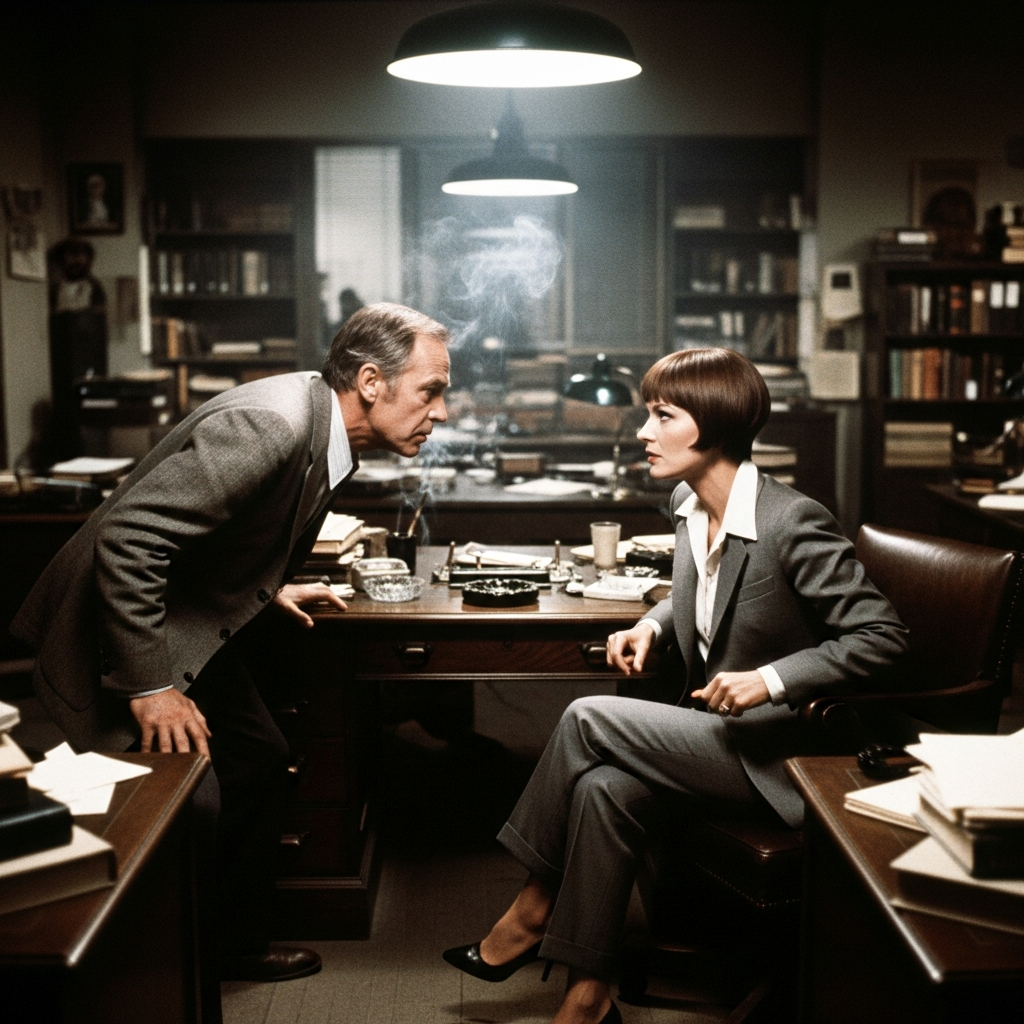
The Cinematic Ontology and Static Data Seeding
AI video generators like Veo 3.1 are highly capable of rendering beautiful imagery, but they lack inherent artistic taste, narrative comprehension, or historical context. If a user simply prompts for a "sad scene," the output is statistically generic. NeuraScene solves this aesthetic void through a deeply seeded, dynamic cinematic ontology.
The system utilizes backend Python scripts (generate_universal_ontologyv6.py) that leverage Gemini to generate universal cinematic, artistic, and photographic ontologies structured meticulously by historical eras. This data generates a comprehensive JSON structure that seeds the Firestore database via TypeScript routines (seedNewOntology.ts), populating distinct film styles, camera lenses, lighting setups, and conceptual elements. When a director inputs a prompt, the system does not merely pass the raw text to Veo 3; it engineers the prompt into structured data, appending the exact ontological parameters. If a director selects a 1970s Neo-Noir aesthetic, the system automatically appends the correct 35mm film stock emulation, high-contrast lighting ratios, and specific directorial styles, ensuring the generated video adheres strictly to a cohesive, historically accurate artistic vision without the user needing to explicitly code those elements.
Script Ingestion and the LLM Assistant Director
The workflow begins with complex script ingestion. A user uploads a screenplay (e.g., .txt, .md, .docx), which is parsed entirely client-side using utilities like jszip to natively unzip and parse XML nodes, avoiding heavy backend processing dependencies. A specialized Gemini 2.5-3.5 Pro system prompt, acting as the "LLM Assistant Director," analyzes the prose and outputs a structured JSON array of ScriptScene objects.
This analysis is critical for addressing the pacing failures seen in B-movies and early AI experiments. Pacing cannot be solved by arbitrarily slicing a script into equal, 5-second visual chunks. The LLM analyzes the specific action density of the scene. It determines if a narrative beat requires a rapid sequence of two-second action cuts or a lingering, ten-second continuous dramatic shot to allow a character's inner monologue to play out visibly. This is particularly vital when processing avant-garde or highly stylized scripts. For instance, if the system ingests a cyberpunk narrative resembling Bruce R. Long's The Chronicles of Xeo Woolfe, where concepts like an "octopus burger" represent deep societal commentary on unenlightened, brutish locals , the LLM Assistant Director must parse the subtext of the obscenity, assigning the correct revulsion and superiority to the character's reaction shots, rather than treating it as a literal culinary order.
The Syntax of Directing Digital Entities
Directing a synthetic actor requires a total translation of the Stanislavski and Meisner methodologies into the rigid syntax of diffusion models. The director cannot rely on the AI to intuitively infer subtext; the subtext must be explicitly rendered into physical, trackable descriptions.
Advanced Image Fusion and the "Thinking Mode"
To achieve hyper-specific character designs that maintain consistency, directors utilize advanced multi-image fusion capabilities. Platforms utilizing NanoBananaPro allow for the blending of up to 8 reference images, maintaining strict facial consistency and resemblance across disparate shots. Furthermore, the implementation of "Thinking Mode" allows the AI to reason through complex prompts, generating interim thought images before producing the final output, ensuring that layered psychological instructions (e.g., a character displaying both high self-monitoring and a triggered abandonment schema) are logically resolved into a single cohesive expression.
Dialogue Markers, True Lip-Sync, and Countermeasures
A major limitation in early AI filmmaking was the complete inability to control precise speech timing, leading to dialogue that felt entirely disconnected from the physical performance. NeuraScene introduces explicit Character Marking and dialogue markers, allowing the director to pinpoint exactly who speaks and the exact millisecond they begin.
By putting words directly into the characters' mouths, the system achieves true lip-sync. This involves a reverse-engineered pipeline to ensure pacing is biologically accurate: rather than generating video and crudely overlaying audio, the system first generates Text-to-Speech (TTS) audio, measures its precise duration down to the millisecond (e.g., 4.2 seconds), and then instructs the Veo 3.1 video generator to create a clip of that exact temporal length.
Furthermore, to maintain consistency during scene extensions—where models might inadvertently swap character voices or identities—NeuraScene enforces a strict prompt structure that dictates explicit speaker ordering and character pinning. A storyboard branching manager allows the director to save extensions as new scene branches, protecting original assets while experimenting with different performance outcomes.
Crucially, authentic drama frequently relies on intense emotional, psychological, or physical conflict. However, underlying AI models are often constrained by zealous safety filters that cannot distinguish between necessary artistic dramatic tension and prohibited violence. NeuraScene deploys sophisticated countermeasures to prevent the story from being blocked by false positives. Through an LLM agent that rewrites prompts to safely navigate filters while preserving the director's artistic intent, the system ensures that complex psychological narratives—such as the volatile dynamics of intimate partner violence rooted in schema chemistry—can be explored without censorship destroying the workflow.
The Architectural Bottleneck: Automating vs. Directing
The ultimate barrier to achieving a feature-length, narrative-driven AI film is the continuity problem. Directing an isolated, beautiful 8-second clip using Veo 3 or NanoBananaPro is a solved technical challenge; seamlessly stitching those clips into a cohesive 90-minute narrative is an immensely difficult architectural problem. The debate within virtual production systems centers on whether to build a fully autonomous "one-click" agent or to maintain a "Creator Tool" that keeps the human director firmly in the loop.
The Limits of the Autonomous Agent and the Sequential Chain
The desire to fully automate the script-to-movie pipeline introduces severe engineering complexities that inevitably strip away creative control and produce highly brittle, unpredictable orchestration. An autonomous agent attempting to stitch scenes encounters four massive, interrelated hurdles:
Non-Deterministic Failures: AI video generation frequently fails due to API timeouts, safety triggers, or bizarre visual glitches. Without a Vision-Language Model (VLM) evaluating every single frame, an automated system operates entirely blind, seamlessly appending glitched, unusable clips into the final render queue.
State Management: Automating long-running processes turns a standard web application into a complex orchestration engine. It requires ironclad checkpointing; if a browser refreshes or the internet drops out at scene 12, the system must hydrate the exact state from the database and resume without unnecessarily re-generating scenes 1–11.
Temporal Drift: Extending continuous scenes causes AI environments and characters to warp, melt, and lose coherency over time. If a character delivers a 15-second monologue, the system must generate a 5-second base clip and trigger multiple extensions. Without a human to identify errors (e.g., a character's face melting slightly in extension one), the system will blindly stitch those errors into extension two, creating a grotesque distortion.
The Irreducible Sequential Chain: Within a continuous movie scene, the system must use the exact last frame of clip $N$ as the input seed image to generate clip $N+1$ to maintain any semblance of visual continuity. Because clip $N+1$ cannot physically start generating until clip $N$ is completely finished, this is a strict sequential dependency that cannot be parallelized.
Platforms catering to content marketers bypass these issues by relying on pre-rendered stock footage or fast-paced listicle formats where narrative continuity is entirely irrelevant. However, for long-form narrative cinema requiring visual permanence—such as a character retaining a torn jacket across multiple scenes or tracking the physical location of props in a room—an autonomous system fails completely, as it lacks visual memory across separate API calls.
The Human-in-the-Loop and Batch Scene Generation
Extensive analysis demonstrates that automated loop-stitching is fundamentally incompatible with long-form narrative filmmaking. The only viable solution for high-fidelity production is the preservation of the human-in-the-loop via Batch Scene Generation.
This middle-ground architecture parallelizes the physical wait times of generation while keeping the director in absolute control. The script is broken down into scene objects, which are passed through the prompt engine. The system fires off multiple independent generation requests concurrently, dynamically rate-limited to respect API quotas. The director then evaluates the outputs in a Review Grid, manually choosing to accept, reject, retry, or meticulously edit the generated clips.
While batch generation significantly speeds up the production of independent movie scenes (such as location changes, extreme wide shots, or time jumps), the continuous, extended shots required for deep dramatic acting still must be generated one by one. The friction of the director manually chaining the last frame to the first frame, actively reviewing continuity, and enforcing the psychological subtext is not a flaw in the system; it is the exact mechanism that ensures the final film is structurally coherent and watchable.

Industry Integration and the Future of Cinematic Education
The synthesis of classical acting theory and generative AI requires a fundamentally new breed of practitioner. The global film industry is rapidly adapting to this paradigm shift, driven by a macroeconomic reality defined as the Productivity J-Curve, where early technology diffusion episodes initially concentrate gains in specialized sectors before transforming aggregate labor productivity across the entire industry. To facilitate this transformation, major institutions are establishing robust educational frameworks to train directors, cinematographers, and actors in virtual production.
In Sydney, a global hub for cinematic innovation, the integration of technology and narrative is heavily supported. The National Institute of Dramatic Art (NIDA) established the NIDA Future Centre in 2024 as a dedicated research and innovation lab exploring the intersection of live entertainment, generative AI, and human performance. Supported by initiatives like the Jim Sharman Future Fund, the Centre connects industry and education, exploring how technology can preserve cultural heritage and push the boundaries of storytelling. Collaborative projects, such as a pioneering 3D virtual reality suite developed by NIDA, the Sydney Theatre Company, and the UNSW iCinema Research Centre, allow directors and set designers to create full-scale virtual prototypes in a 360-degree environment, fundamentally altering spatial blocking and performance design before a physical set is ever constructed. However, NIDA maintains strict academic integrity regarding AI, stipulating that while AI can be used for research and reference, the final performance must reflect the student's own creative development.
Similarly, the Australian Film Television and Radio School (AFTRS) has launched specialized virtual production and generative AI courses in response to growing industry demands. Offerings such as "Gen AI Image & Video Prompting for Screen" and "AI Prompt Design for Screen Practitioners" are specifically tailored for filmmakers aiming to translate screen-industry language into effective AI-driven visual outputs. These workshops, alongside specialized webinars focusing on AI tools in audio production, focus heavily on the ethical considerations of AI, the reduction of hallucinations, and the precision required to guide AI outputs to reflect genuine creative intent. AFTRS also offers practical "Volume Studio Fundamentals" courses, teaching practitioners how to operate within state-of-the-art LED volumes.
Other institutions, such as the Academy of Interactive Entertainment (AIE) and SAE Institute in Sydney, offer comprehensive degrees in Filmmaking and Virtual Production, blending traditional cinematography with advanced digital methodologies. Professional organizations like the Visual Effects Society (VES) host global events in Sydney focusing on In-Camera Visual Effects (ICVFX) and Motion Capture (MoCap) acting on virtual production stages.
This educational pivot highlights a crucial, unavoidable reality: AI will not replace the director. Rather, the director who masters the translation of complex human psychology into synthetic prompting will entirely replace the director who cannot. The tools have evolved from physical cameras and stage lights to diffusion models and massive ontological expert systems, but the core requirement remains identical: the rigorous, empathetic, and highly technical orchestration of truth.
Conclusion
The creation of believable cinematic performance is a delicate, exhaustive alchemy of psychology, mechanics, and cutting-edge technology. As the boundaries between physical and virtual production dissolve, the fundamental tenets of classical acting theory—the absolute rejection of indicating, the biological necessity of active listening, the preservation of the illusion of the first time, and the gravitational depth of the inner monologue—remain the unshakeable foundation of all narrative art.
Systems like NeuraScene and models like Veo 3 and Nano Banana

Pro possess the raw computational capacity to render photorealistic realities, but they require a visionary human director to imbue those realities with psychological truth. By leveraging clinical frameworks such as schema chemistry, personality organization, and self-monitoring, a director can effectively reverse-engineer the immense complexity of human emotion into the structured data required by diffusion models.
Furthermore, the architectural limitations of AI video generation underscore the irreplaceable value of the human-in-the-loop. The continuous sequential bottlenecks and the persistent, destructive threat of temporal drift prove that nuanced storytelling cannot be entirely abdicated to an autonomous agent. The friction inherent in the creative process—the meticulous checking of visual continuity, the refinement of a text prompt to capture a subtle facial tic, the adjustment of a dialogue marker to achieve perfect lip-sync, and the engineering of countermeasures to bypass censorship—is the very mechanism that breathes life into the synthetic actor.
Ultimately, the integration of generative AI into film production is not an erasure of the classical cinematic craft; it is its ultimate, most demanding test. The medium has transformed, but the mandate remains unchanged: to hold a mirror up to nature, rendering the human experience with uncompromising authenticity, regardless of whether the actor is made of flesh, blood, or code.